When to See the Light Beams in Antelope Canyon
The Antelope Canyon light beams appear late March to early October, strongest midday in summer. Here's the exact season, daily window and slots to book.
The shafts of light that pour down into Upper Antelope Canyon are the reason most people make the trip to Page, Arizona — and they are also the most misunderstood part of planning a visit. The beams are not present year-round, and they are not visible at every time of day. Timing your tour around the sun is the single biggest thing you can control. This guide explains exactly when the beams appear, why a midday slot matters, and how to give yourself the best odds. When you’re ready, you can check Upper Antelope Canyon tour availability and pick your slot.
When Are the Light Beams Visible?
The famous light beams appear roughly from late March through early October, and they are at their most dramatic in June, July, and August, when the sun climbs high enough to reach the narrow canyon floor. Outside that window — in late autumn and winter — the sun sits too low in the sky to send a focused shaft down into the slot, so you’ll see beautiful glowing sandstone but no defined beams.
| Season | Light beams? | What to expect |
|---|---|---|
| Late March – May | Building (best in May) | Beams returning; fewer crowds than peak |
| June – August | Peak — strongest beams | Best beams; biggest crowds and prices |
| September – early October | Fading | Beams still possible early; quieter |
| Mid October – February | No defined beams | Soft glowing light, calmest visit |
What Time of Day Do the Beams Appear?
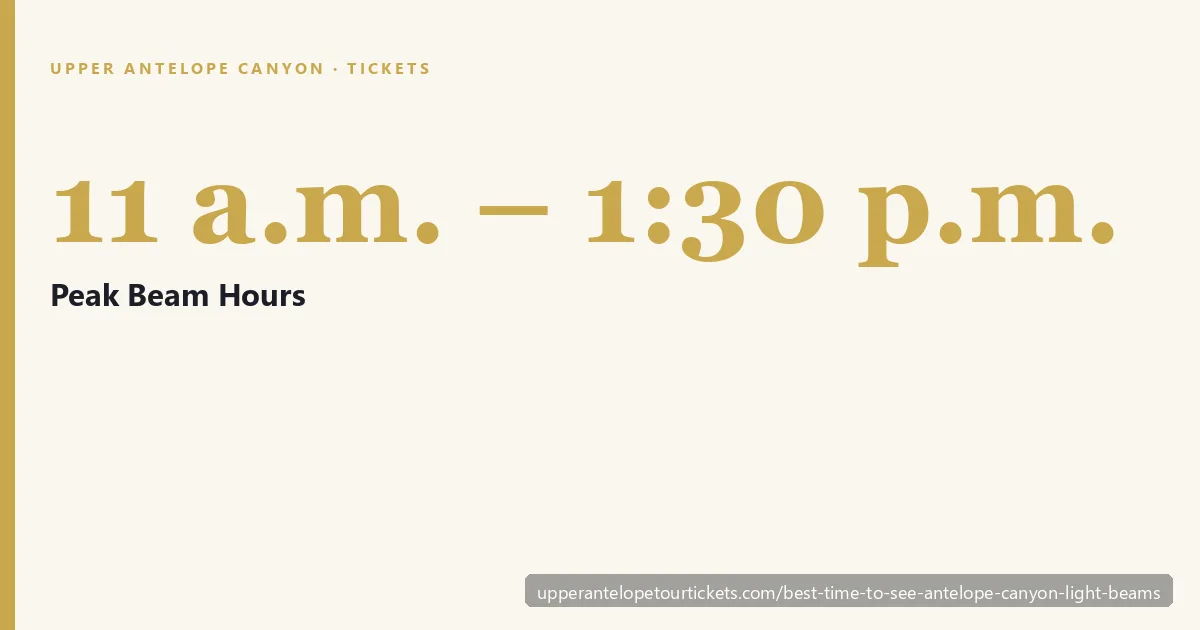
The beams form when the sun is high enough to shine directly through the canyon’s narrow top opening, which happens around the middle of the day — generally between about 11 a.m. and 1:30 p.m. in the peak summer months. That is why prime-time midday slots are the most sought-after (and the first to sell out). Book a late-morning entry if beams are your priority.
One important caveat: beams need clear sky and the right sun angle, so they are never fully guaranteed. An overcast day or a stretch of monsoon cloud can mute them even in peak season. If you only have one shot, a clear, sunny summer midday is your best bet.
Beams vs Glowing Light: Two Different Goals
It helps to be honest about what you’re chasing:
- You want the beams. Go in June–August, book the closest slot you can to midday, and accept the crowds and the premium price that come with prime time.
- You want a calmer, cheaper visit. Shoulder seasons (spring and fall) and early-morning or late-afternoon slots trade the beams for softer, glowing reflected light, smaller groups, and lower prices. Many visitors actually prefer this gentler look.
There is no wrong answer — Upper Antelope is stunning in both moods. Just match your booking to your goal rather than hoping for both at once.
Crowds, Heat and Monsoon Season
Peak beam season is also peak everything else. Summer midday slots draw the largest crowds, and Page sits in high desert that gets genuinely hot in July and August — bring water and sun protection. Summer is also the Southwest monsoon, running roughly mid-June through September and peaking in July and August, when brief but intense afternoon thunderstorms can roll in.
The danger with a slot canyon is that it can flood violently even when the sky directly overhead is clear — the storm that fills it may be raining miles away, upstream. That is exactly what made the canyon’s darkest day so devastating: on August 12, 1997, a flash flood tore through nearby Lower Antelope Canyon and killed 11 hikers, triggered by a thunderstorm roughly 15 miles upstream where almost no rain was falling at the canyon itself.
That tragedy reshaped how both canyons are run. Entry is now guided-only by law, the ladders and stairways are bolted steel rather than the loose wood of the past, and operators (with Navajo Parks) monitor upstream weather and will close or evacuate the canyon the moment rain threatens the drainage above it. Those closures can be frustrating if they land on your one free afternoon, but they are the safety system working as intended. If you are visiting in monsoon season, favour a morning slot — storms tend to build later in the day — and keep your afternoon flexible.
How to Maximise Your Odds
- Visit in summer (June–August) for the strongest, most reliable beams.
- Book a late-morning to midday slot — aim for the 11 a.m.–1:30 p.m. window.
- Choose a clear-forecast day if your dates are flexible; cloud kills beams.
- Book early. Prime-time slots sell out well ahead in peak season.
- Bring a plan B mindset — weather closures and cloudy spells happen, and the canyon is still extraordinary without beams.
Our featured Navajo-guided Upper Antelope Canyon tour starts from $95 per person and is rated 4.5 stars by more than 2,600 guests. There is also a dedicated prime-time entry option built specifically around the midday beam window for travelers who want the best possible odds. Whichever you choose, the entry ticket, Navajo Parks permit, and authorized Navajo guide are all included.
Ready to Book?
The beams won’t wait for the perfect plan — but a little timing goes a long way. Pick a summer midday slot, cross your fingers for clear sky, and let a Navajo guide lead you through Tsé bighánílíní. See the featured Upper Antelope Canyon tour and check availability.
See the Light Beams of Upper Antelope Canyon
Join 2,600+ guests on a Navajo-guided walk through Tsé bighánílíní. Every tour includes your Upper Antelope Canyon entry ticket, the Navajo Parks & Recreation permit, and an authorized Navajo guide — with free cancellation up to 24 hours before.
Check Availability & Book